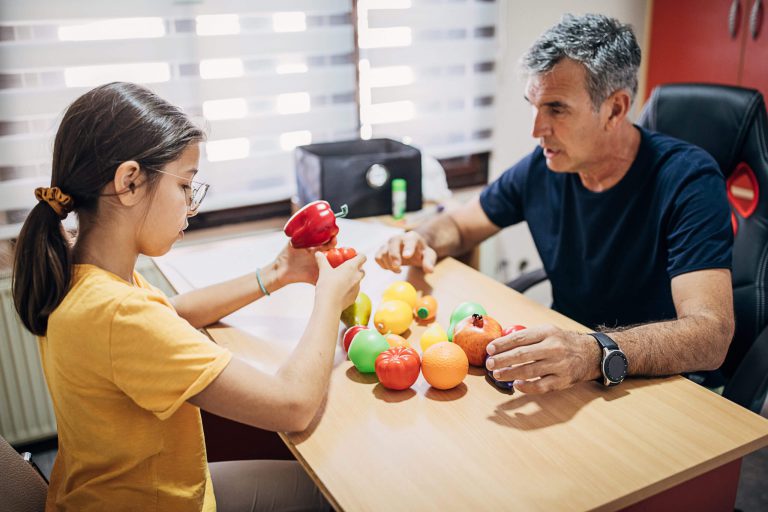
A professional and a student inspecting a group of sensory shaped fruits.

Sensory Needs for Students of All Ages

Imagine your body constantly bombarding you with messages. When this happens, you cannot concentrate on the tasks from your teacher. This is the reality for students of all ages in classrooms who have sensory processing issues. No matter what their formal diagnosis may be, many may have sensory concerns. Some students are overwhelmed with outside stimulation in their environment and may become hyperactive. Others may not react to things and seek out sensory input. In addition to this, some kids need sensory to push on with tasks. Every child is different, and it’s important for occupational therapists and special education teachers to work together to create a sensory diet to assist their needs.
Read More

A student and a therapist seated across each other in friendly discussion.

The Need for School Based Therapy

Students across the country are experiencing an increase in mental health concerns. Those working in schools know that outside health concerns of a child impact their day to day academic learning. While the ideal situation may have been for children to head to a doctor or therapist outside of the school day, the reality is it can’t always happen. This is why many schools are leaning toward a school-based therapy approach. With guardian permission, kids are able to work with healthcare professionals to get needed therapy within the school day. Taking therapists out of their clinics and putting them into school makes it more affordable and convenient.

Read More

A student signing to their teacher in the foreground.

Extracurricular Activities for Deaf High School Students

The high school years are often challenging for students. They are attempting to find their own place in the world and may not know what they want to do after graduation. Some teens are able to hone in on activities which are interesting and make them happy through extracurricular opportunities. These may be after school sports or clubs. Most schools offer a wide variety of extracurricular activities ranging from writing for the newspaper, acting, art, robotics, foreign languages, and more. This is great for most teens, but what about those with special needs?

Read More

A group of parents and students having coffee and friendly discussion.

“How to Stop Bullying”: US Bullying Search Trends

More than one in five (20.8%) students report being bullied in the US every year. Reports also estimate that only 36% of kids who are bullied actually report it, so the figures are probably much higher.

Read More

A girl performing a rep on a fly machine.

Adaptive Physical Education for Special Needs Students

Gym class can be difficult for many students. It is often a less structured time which has a lot of stimuli going on. There are also many social interactions that take place between peers. This may be interacting with one another, or playing a sport within the gym class. This may be a challenge for any child, no less one with special needs. Adaptive physical education classes are helping to change the way students interact and make it a successful experience for those involved.

Read More