
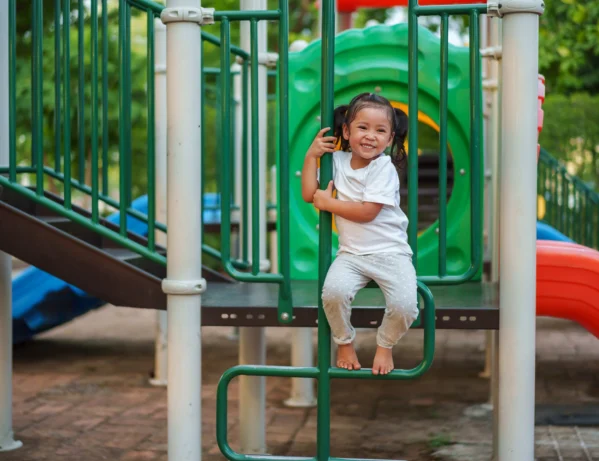
For kids, play is how they build confidence, process emotions, strengthen social skills, explore independence, and connect with the world around them. That is why the spaces children grow up in matter so much.
To better understand where kids may have the strongest access to healthy, enriching outdoor play opportunities, ProCare created the U.S. Playability Index, a ranking of the most populous U.S. cities based on a custom Playability Score. The index looks at five factors that help shape how easy it is for children to get outside, move, explore, and play: park access, walkability, playground availability, skate parks, and splashpads.
What emerged is a revealing snapshot of modern childhood in America. Some cities appear to leave families with fewer nearby opportunities, fewer child-centered amenities, and more barriers between kids and the kinds of experiences that support healthy development. However, other cities stand out for clearly building environments that make play feel accessible and woven into everyday life.
Playability Index Key Findings
Boston, Massachusetts, ranked as the most playable city overall, earning the highest overall Playability Index score in the study. Sacramento, Las Vegas, Portland, and San Francisco rounded out the top five. At the other end of the ranking, Port St. Lucie, Florida placed last overall, followed by Winston-Salem, Lubbock, Orlando, and Oklahoma City.
- The top cities were not all the same type of place. Some were dense, highly walkable cities, while others stood out because they offered especially strong access to play amenities for children.
- Park access makes a major difference. Cities that scored well overall often paired strong amenities with easier proximity to parks.
- Walkability mattered, too. In many of the higher-ranking cities, play did not seem limited to destination-based outings—it appeared to be more integrated into neighborhood life.
- Some cities performed well in one category but struggled overall, showing that one strong feature alone is not enough to create a truly supportive play environment.
The 10 Most Playable Cities in the U.S.
According to ProCare’s Playability Index, these were the top 10 cities overall, including each city’s score out of 100 total possible points:
- Boston, MA – 69.1
- Sacramento, CA – 65.2
- Las Vegas, NV – 64.9
- Portland, OR – 61.7
- San Francisco, CA – 58.7
- Pittsburgh, PA – 56.4
- Seattle, WA – 55.6
- Minneapolis, MN – 55.4
- Denver, CO – 55.1
- Washington, DC – 53.5
Boston’s first-place finish was driven by especially strong performance across multiple categories, including park access, walkability, and splashpads. Sacramento and Las Vegas also stood out for their amenity access, while Portland and San Francisco benefited from exceptionally strong walkability.
The 10 Least Playable Cities in the U.S.
These cities ranked lowest overall in the index:
- Wichita, KS – 24.8
- Gilbert, AZ – 24.5
- Houston, TX – 24.4
- Memphis, TN – 24.1
- Greensboro, NC – 24.0
- Oklahoma City, OK – 21.4
- Orlando, FL – 15.9
- Lubbock, TX – 13.2
- Winston-Salem, NC – 7.6
- Port St. Lucie, FL – 6.4
Many of the bottom-ranking cities struggled with a mix of lower walkability, weaker park-access scores, or limited child-focused amenities relative to their youth populations. That does not mean children in these places are not playing or thriving. It does suggest, though, that the built environment may be making play less accessible than it could be.
Top Playability Performers
Looking at the individual metrics reveals a more detailed picture of what makes a city feel “playable.”
Best Walkability
The strongest cities for walkability were:
- San Francisco, CA
- Portland, OR
- Boston, MA
- Philadelphia, PA
- Washington, DC
These cities suggest that a healthy play ecosystem is not just about having places to play, but also about how easy it is for families to get to them.
Most Playgrounds per 100,000 Children
The top cities for playground access were:
- Las Vegas, NV
- Cincinnati, OH
- Madison, WI
- Norfolk, VA
- Irvine, CA
This category highlights cities where children may have more opportunities for free, everyday outdoor play close to home.
Most Skate Parks per 100,000 Children
The top cities for skate parks were:
- Reno, NV
- Sacramento, CA
- Chula Vista, CA
- Boise, ID
- Laredo, TX
Skate parks can be especially meaningful for older children and teens, creating spaces for movement, confidence-building, and social connection.
Most Splashpads per 100,000 Children
The top cities for splashpads were:
- Boston, MA
- Cleveland, OH
- Pittsburgh, PA
- Chicago, IL
- Jersey City, NJ
Splashpads can offer low-barrier, family-friendly outdoor play, especially during warmer months.
Best Park Access
The highest scores for access to parks were found in:
- Chicago, IL
- Boston, MA
- Arlington, VA
- Denver, CO
- San Francisco, CA
When children live closer to parks, outdoor play may feel less like a special trip and more like a realistic part of everyday life.
The Full Playability Rankings
| Rank | City | Playability Index Score |
|---|---|---|
| 1 | Boston, MA | 69.1 |
| 2 | Sacramento, CA | 65.2 |
| 3 | Las Vegas, NV | 64.9 |
| 4 | Portland, OR | 61.7 |
| 5 | San Francisco, CA | 58.7 |
| 6 | Pittsburgh, PA | 56.4 |
| 7 | Seattle, WA | 55.6 |
| 8 | Minneapolis, MN | 55.4 |
| 9 | Denver, CO | 55.1 |
| 10 | Washington, DC | 53.5 |
| 11 | Richmond, VA | 53.4 |
| 12 | Henderson, NV | 52.7 |
| 13 | Reno, NV | 52.7 |
| 14 | Cincinnati, OH | 52.4 |
| 15 | Chicago, IL | 52.2 |
| 16 | Arlington, VA | 52.1 |
| 17 | Anaheim, CA | 51.4 |
| 18 | Jersey City, NJ | 50.7 |
| 19 | Long Beach, CA | 50.5 |
| 20 | St. Paul, MN | 50.1 |
| 21 | Norfolk, VA | 50.1 |
| 22 | St. Petersburg, FL | 50.0 |
| 23 | Boise, ID | 49.6 |
| 24 | Philadelphia, PA | 49.4 |
| 25 | Chula Vista, CA | 49.4 |
| 26 | Cleveland, OH | 48.4 |
| 27 | New York, NY | 47.6 |
| 28 | Irvine, CA | 45.5 |
| 29 | St. Louis, MO | 45.0 |
| 30 | Baltimore, MD | 44.7 |
| 31 | San Jose, CA | 43.0 |
| 32 | Albuquerque, NM | 42.9 |
| 33 | Milwaukee, WI | 42.7 |
| 34 | Oakland, CA | 42.5 |
| 35 | Madison, WI | 42.4 |
| 36 | Santa Ana, CA | 41.3 |
| 37 | Los Angeles, CA | 40.3 |
| 38 | New Orleans, LA | 40.2 |
| 39 | Omaha, NE | 39.8 |
| 40 | Fremont, CA | 39.7 |
| 41 | Spokane, WA | 39.6 |
| 42 | Virginia Beach, VA | 39.3 |
| 43 | Miami, FL | 39.1 |
| 44 | Anchorage, AK | 39.0 |
| 45 | Newark, NJ | 39.0 |
| 46 | Santa Clarita, CA | 38.6 |
| 47 | Honolulu, HI | 38.4 |
| 48 | Lexington-Fayette County, KY | 38.3 |
| 49 | Tulsa, OK | 38.2 |
| 50 | El Paso, TX | 37.7 |
| 51 | Atlanta, GA | 37.3 |
| 52 | Aurora, CO | 37.2 |
| 53 | San Diego, CA | 37.2 |
| 54 | Lincoln, NE | 37.0 |
| 55 | Corpus Christi, TX | 36.5 |
| 56 | North Las Vegas, NV | 36.2 |
| 57 | Scottsdale, AZ | 35.9 |
| 58 | Colorado Springs, CO | 35.6 |
| 59 | Detroit, MI | 35.5 |
| 60 | Irving, TX | 35.4 |
| 61 | Toledo, OH | 34.8 |
| 62 | Buffalo, NY | 34.6 |
| 63 | Dallas, TX | 34.4 |
| 64 | Garland, TX | 34.3 |
| 65 | Arlington, TX | 33.9 |
| 66 | Kansas City, MO | 33.9 |
| 67 | Laredo, TX | 31.7 |
| 68 | Chesapeake, VA | 31.5 |
| 69 | Louisville-Jefferson County, KY | 30.8 |
| 70 | Glendale, AZ | 30.6 |
| 71 | Plano, TX | 30.5 |
| 72 | Austin, TX | 30.3 |
| 73 | Durham, NC | 30.2 |
| 74 | Tampa, FL | 29.7 |
| 75 | Fresno, CA | 29.3 |
| 76 | Chandler, AZ | 29.1 |
| 77 | Charlotte, NC | 28.6 |
| 78 | Nashville-Davidson County, TN | 28.5 |
| 79 | Jacksonville, FL | 28.4 |
| 80 | Riverside, CA | 27.8 |
| 81 | Phoenix, AZ | 27.8 |
| 82 | Raleigh, NC | 27.4 |
| 83 | Bakersfield, CA | 27.0 |
| 84 | Mesa, AZ | 26.9 |
| 85 | Fort Worth, TX | 26.8 |
| 86 | Tucson, AZ | 26.6 |
| 87 | Stockton, CA | 26.6 |
| 88 | San Antonio, TX | 26.5 |
| 89 | Frisco, TX | 25.8 |
| 90 | Wichita, KS | 24.8 |
| 91 | Gilbert, AZ | 24.5 |
| 92 | Houston, TX | 24.4 |
| 93 | Memphis, TN | 24.1 |
| 94 | Greensboro, NC | 24.0 |
| 95 | Oklahoma City, OK | 21.4 |
| 96 | Orlando, FL | 15.9 |
| 97 | Lubbock, TX | 13.2 |
| 98 | Winston-Salem, NC | 7.6 |
| 99 | Port St. Lucie, FL | 6.4 |
The Importance of Play
The Playability Index aims to highlight how much a child’s environment can shape their daily opportunities to move, imagine, regulate emotions, and connect with others.
A city does not need to be perfect to support children well. But when walkability is low, park access is limited, and child-centered amenities are sparse, play can become harder to reach—especially for families already balancing transportation challenges, tight schedules, cost concerns, or accessibility needs.
That matters because play is not separate from development. It is part of development. A child’s ability to climb, run, negotiate rules, try something new, recover from frustration, or invent a game with peers can all be supported by something as simple as having safe, nearby spaces to play.
“Play is one of the most natural and important ways children learn,” says Carrie Serr, Registered Behavior Technician and Director of Educational Resources at ProCare Therapy. “It supports problem-solving, emotional regulation, communication, motor development, and social confidence all at once.”
How Families and Communities Can Support Play
While city infrastructure matters, there are still meaningful ways families, schools, and communities can advocate for stronger play opportunities:
- Support local investment in parks, playgrounds, and child-friendly recreation spaces
- Ask schools and community leaders to prioritize inclusive, accessible outdoor environments
- Look for simple ways to build more unstructured play into daily routines
- Advocate for walkable neighborhoods and safe routes to parks
- Recognize outdoor play as a key part of whole-child wellness, not just downtime
At ProCare Therapy, we know children thrive when they have the right support both inside and outside the classroom. While play spaces and community environments matter, so do the people who help children build confidence, navigate challenges, and grow into their full potential every day at school. Through dedicated school professionals such as therapists, counselors, psychologists, and special educators, ProCare helps connect students with the support they need to strengthen their social, emotional, behavioral, and developmental well-being. Explore how ProCare Therapy supports schools and students nationwide.
Methodology
To identify the most “playable” U.S. cities for children, this index evaluated each city across five indicators related to park access, walkability, and the availability of recreational amenities that support active outdoor play. Each indicator was weighted equally at 20%, for a total possible score of 100 points. Higher scores indicate a more playable city environment for children.
The index included the following indicators:
1. Percent of residents living within 1 mile of a park
This metric reflects how accessible parks are to local residents. Cities where a greater share of the population lives within one mile of a park may offer children and families more consistent opportunities for outdoor play, recreation, and access to green space.
Source: National Environmental Public Health Tracking Network
2. Walkability score
Walkability was included to capture how easy it may be for families to reach parks, playgrounds, and recreational spaces on foot. More walkable environments can make it easier and safer for children to access nearby amenities and spend time outdoors.
Source: National Environmental Public Health Tracking Network
3. Playgrounds per 100,000 children
This metric measures the concentration of playground locations relative to the local youth population. Higher playground availability may indicate more opportunities for children to engage in unstructured outdoor play close to home.
Source: Trust for Public Land, retrieved via Statista
4. Skate parks per 100,000 children
This factor captures access to dedicated recreation spaces for older children and teens. Skate parks were defined as outdoor facilities intended for skateboarding or related activities, including roller-skating and roller-blading.
Source: Trust for Public Land, retrieved via Statista
5. Splashpads per 100,000 children
This metric reflects access to child-friendly water play amenities, which can be especially valuable during warmer months. Splashpads were defined as water play areas with interactive fountains or features designed for recreation, including splash pads, spraygrounds, and spray showers.
Source: Trust for Public Land, retrieved via Statista
For the three amenity-based indicators — playgrounds, skate parks, and splashpads — rates were calculated per 100,000 children to better reflect how available these features are relative to the local youth population, rather than city size alone.
Each indicator was normalized onto a common scale and assigned up to 20 points, with higher-performing cities receiving higher scores. The five weighted indicator scores were then combined to produce each city’s overall Playability Index score out of 100.
Because the most recent nationally available datasets were used for each indicator, data years may vary slightly by source.